Why Choose Dental Implants?
Tooth loss can have a significant impact on your daily life, affecting your ability to chew comfortably, speak clearly, and smile confidently. Dental implants address these issues directly, and because they replace the tooth root as well as the visible tooth, they offer long-term benefits that bridges and dentures, which only replace what’s visible above the gumline, simply can’t match.
Prevent Bone Loss: A Foundation for Long-Term Health
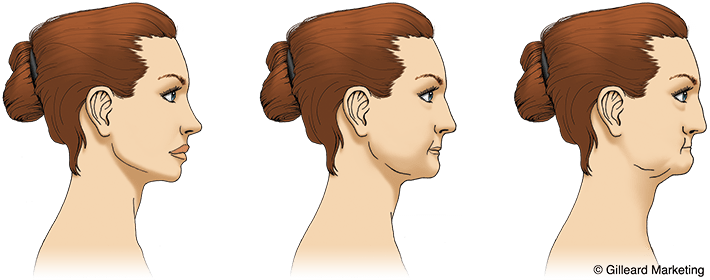 When a tooth is lost, the jawbone in that area stops receiving the stimulation it needs from chewing forces, and the body begins reabsorbing it. This process, called alveolar bone resorption, is fastest in the first year after tooth loss and continues gradually afterward. Studies have shown the jawbone can lose a significant percentage of its width within that first year alone when the tooth isn’t replaced with something that transmits chewing force to the bone.
Dentures rest on top of the gums and don’t stimulate the bone underneath, which is why long-term denture wearers often see continued bone loss and a corresponding change in facial structure over time. Dental implants function like a natural tooth root, transmitting chewing forces directly into the jawbone and maintaining the stimulation that prevents this loss. This is one of the main reasons periodontists, who specialize in the bone and soft tissue supporting teeth, tend to be strong advocates for implants as the tooth replacement of choice whenever a patient is a candidate.
Restore Confidence With Natural-Looking Results
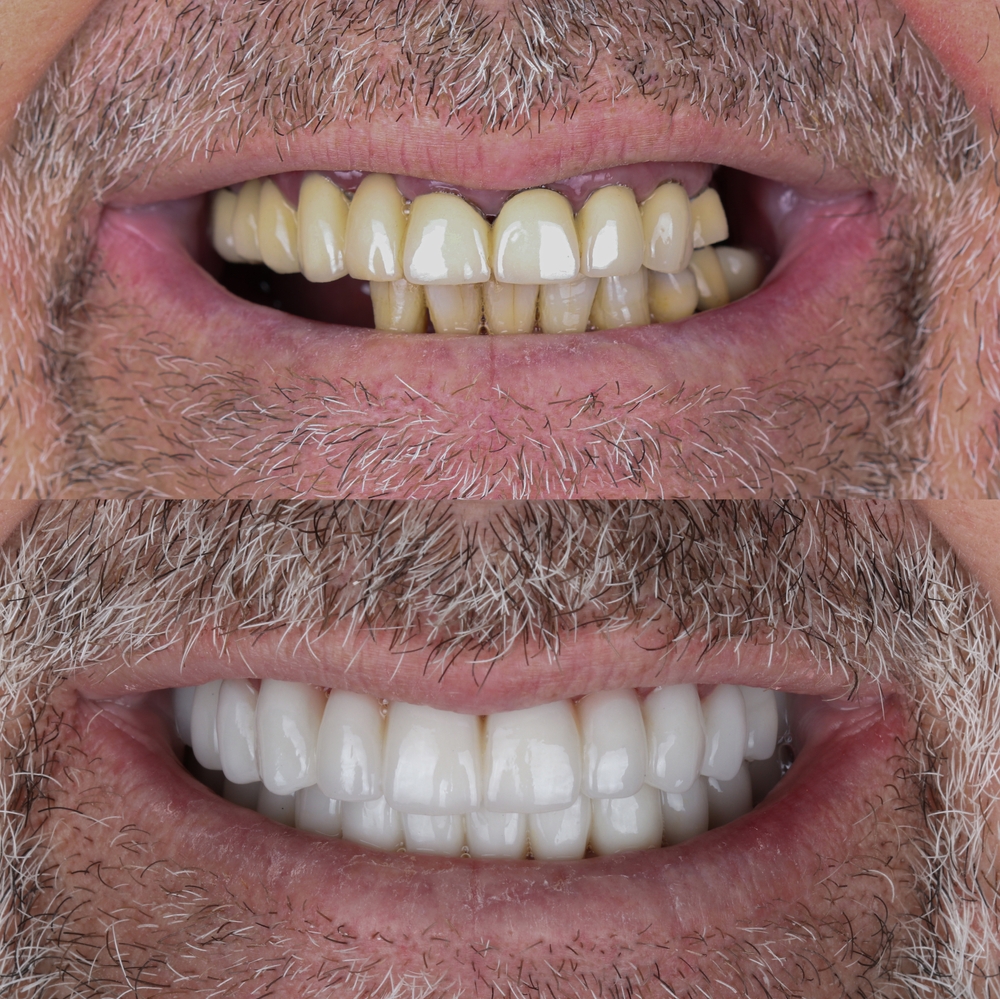
Missing teeth can cause self-consciousness and affect your interactions with others. Dental implants are custom-crafted to match the shape, size, and color of your natural teeth, providing a seamless, natural-looking result. Because implants also preserve the bone and gum tissue around them, they help maintain your natural facial contours in a way that bridges and dentures, which don’t prevent bone loss, cannot guarantee over the long term.
Enjoy Unrestricted Eating
 Natural teeth can generate significant biting force, while traditional dentures typically restore only a fraction of that, which is why many denture wearers avoid foods like steak, fresh apples, or crusty bread altogether. Dental implants are anchored directly in the jawbone, restoring chewing force much closer to that of natural teeth. This stability allows most implant patients to eat the foods they’d stopped eating years earlier without discomfort or dietary restriction, which also makes it easier to maintain a varied, nutritious diet.
Improve Speech and Communication
Missing teeth, especially front teeth, can affect your ability to pronounce certain sounds clearly. Sounds like “s,” “f,” and “th” rely on your tongue and lips interacting with your teeth in specific ways, and gaps can alter airflow enough to cause a noticeable lisp or slurring. Dental implants fill these gaps in a fixed, stable position, unlike removable dentures that can shift slightly during speech, restoring proper speech patterns and letting you communicate with clarity and confidence.
Long-Lasting and Durable Solution
Dental implants are a long-term investment in your oral health. With proper care and maintenance, the implant post itself is designed to last for decades or even a lifetime, offering a level of durability that removable options can’t match. Our dental implant maintenance page covers the specific care routine that supports this long-term durability.
Enhance Overall Oral Health
Traditional bridges require grinding down the healthy teeth on either side of a gap to anchor the bridge in place, permanently altering teeth that may otherwise be perfectly healthy. Dental implants don’t rely on neighboring teeth at all, so no healthy tooth structure needs to be sacrificed. Implants also make it easier to clean between teeth normally, which supports better gum health and reduces plaque buildup around the site over time.
 Prevent Shifting of Adjacent Teeth and Bite Problems
When a tooth is lost and not replaced, the surrounding teeth gradually drift into the space, and the opposing tooth in the other arch can also over-erupt into the gap. Over time, this shifting changes your bite alignment, which can lead to uneven wear, jaw discomfort, and a bite that feels increasingly “off.” Filling the gap with an implant keeps adjacent teeth stable and your bite properly aligned, preventing a chain reaction of problems that can be far more involved to correct later than the original missing tooth would have been.
Dental Implants vs. Bridges vs. Dentures: A Side-by-Side Look
Patients often ask us to explain, plainly, what actually separates these three options:
- Bone Preservation: Implants stimulate the jawbone and prevent resorption. Bridges and dentures do not.
- Effect on Healthy Teeth: Implants require no alteration of neighboring teeth. Bridges require grinding down the teeth on either side of the gap.
- Stability: Implants are fixed permanently in the bone. Dentures can shift, click, or require adhesives; bridges are fixed but depend on the health of the supporting teeth.
- Chewing Function: Implants restore chewing force close to that of natural teeth. Dentures typically restore only a portion of natural chewing force.
- Long-Term Cost: Implants have a higher upfront cost but typically don’t require the periodic relining, adjustment, or replacement that dentures and bridges often need over the years.
For a closer look at whether you’re a candidate for implants specifically, visit our dental implant candidacy page.
What Happens if You Wait on Replacing Missing Teeth?
It’s common for patients to put off replacing a missing tooth, especially if it’s not visible or isn’t causing pain. But the bone loss, shifting, and bite changes described above don’t pause while you decide. The longer a gap goes unaddressed, the more bone density can be lost in that area, which sometimes means a patient who would have qualified for a standard implant a year or two earlier now needs a bone graft first to rebuild adequate bone for placement. Addressing tooth loss sooner rather than later often means a more straightforward path to implants, not just a faster one.

 Drs. Ryan, Tyler, and Thomas Rubino use the latest technology to make your treatments gentle, minimally invasive, and comfortable. As an Assistant Professor at the University of Kentucky College of Dentistry, Dr. Thomas Rubino works directly with periodontal residents in the clinic, and he’s served as a continuing education provider training other Florida dentists since 1990. That teaching role means our understanding of how implants prevent alveolar bone loss isn’t secondhand; it’s informed by staying current enough on the research to instruct other practitioners on it.