Dental Implant Services in Bradenton, Sarasota, and Parrish, FL

Rubino Periodontics and Implant Dentistry

Looking for a Permanent Solution to Missing Teeth? 

If you’re missing one or more teeth and looking for a permanent, natural-looking replacement, dental implants offer the most durable solution available today. At Rubino Periodontics and Implant Dentistry, Drs. Ryan, Tyler, and Thomas Rubino have placed dental implants since 1990, using advanced imaging and minimally invasive techniques to make the process as accurate and comfortable as possible. Patients throughout Bradenton, Sarasota, and Parrish, as well as Palmetto, Ellenton, and Venice, trust our team for implant care backed by decades of experience.

Call 941-201-3055 for our Sarasota/Lakewood Ranch office, 941-209-5052 for Bradenton, or 813-331-5845 for Parrish to schedule your consultation.

A Three-Generation Family of Board-Certified Periodontists

Rubino Periodontics and Implant Dentistry isn’t a general practice that also places implants. Every doctor on our team, Thomas, Ryan, and Tyler Rubino, along with Dr. Priscilla Sosa, is a board-certified periodontal specialist, trained specifically in the bone and gum tissue that determine long-term implant success. The practice has placed implants since 1990 across thousands of cases. 

Dr. Thomas Rubino’s periodontal career goes back to 1988. Dr. Rubino’s expertise extends into teaching: he’s an Assistant Professor at the University of Kentucky College of Dentistry working directly with periodontal residents, and he’s served as a Florida continuing education provider since 1990. That recognition has been echoed by his peers, with a “Top Dentist” honor in Sarasota Magazine every year since 2011 and a listing in the Consumer Research Council’s Guide to America’s Top Dentists since 2014. 

Dr. Ryan Rubino adds a published research background, presenting at the International Association for Dental Research and authoring a Master’s thesis now accepted for publication in a peer-reviewed journal. All three doctors are active members of the American Academy of Periodontology, the American Dental Association, the Florida Dental Association, and the Manatee County Dental Society.

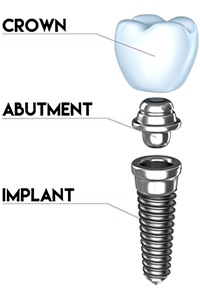
parts of a dental implantWhat Are Dental Implants?

A dental implant is a titanium post surgically placed into the jawbone to act as an artificial tooth root. Over several months, the implant fuses with the surrounding bone through a process called osseointegration, creating a stable foundation for a custom crown, bridge, or denture. Because implants replace the root as well as the visible tooth, they preserve jawbone density in a way that bridges and dentures cannot, which is why they’re considered the standard for long-term tooth replacement.

Why Choose a Periodontist for Dental Implants?

General dentists can place implants, but periodontists specialize specifically in the bone and gum tissue that determine whether an implant succeeds long-term. Drs. Ryan, Tyler, and Thomas Rubino completed additional years of specialized training beyond dental school focused entirely on the structures that support teeth and implants. This matters most in the more complex cases: patients with bone loss, active gum disease, or a previously failed implant elsewhere often benefit from a periodontist’s more specialized evaluation before treatment even begins.

Are You a Candidate for Dental Implants?

Good candidates for dental implants have healthy gums, sufficient jawbone density, and are in reasonably good general health. Conditions like uncontrolled diabetes, active gum disease, or smoking can affect candidacy, though many patients who don’t initially qualify can become candidates through treatments like bone grafting or periodontal therapy. Age alone is rarely a barrier.

Our dental implant candidacy page walks through the specific factors we evaluate, along with what to expect at your consultation.

Why Patients Choose Dental Implants 

Patients choose dental implants over dentures and bridges for several reasons:
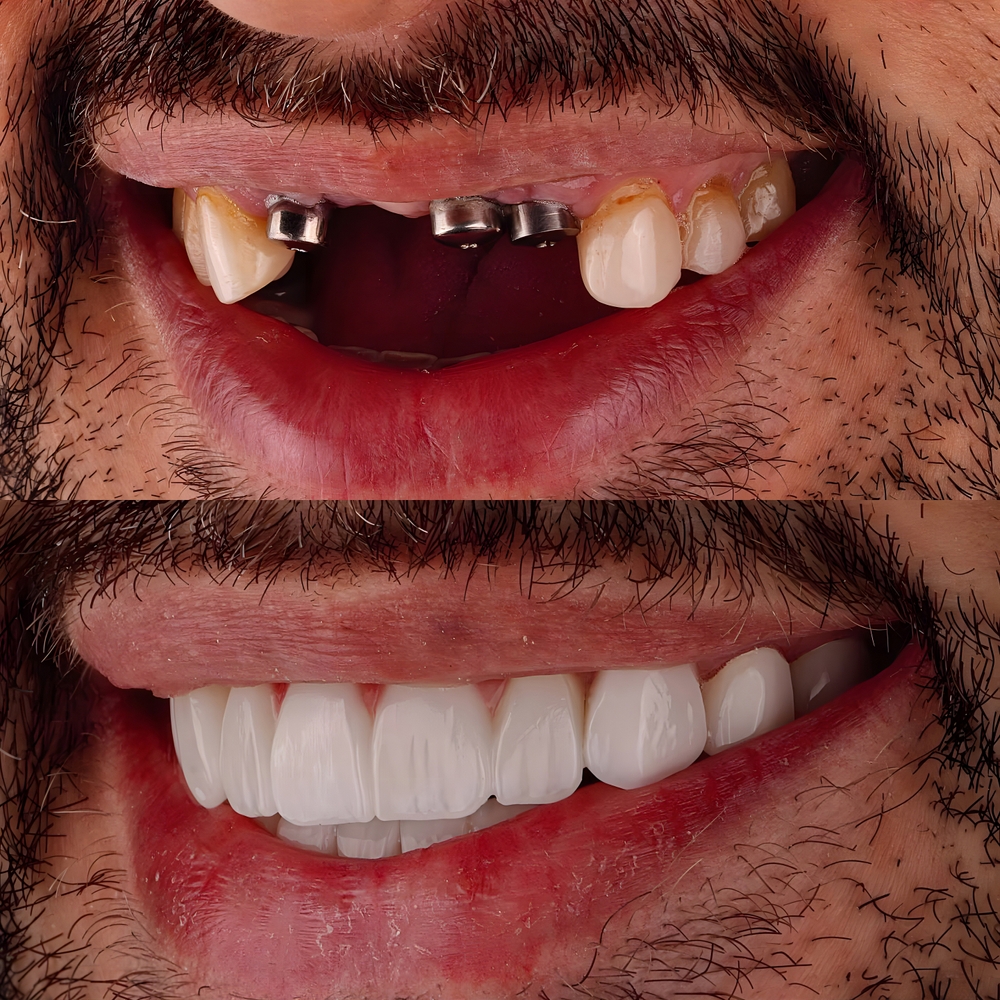
  • before and after restoration added to dental implants in mouthBone preservation: Implants stimulate the jawbone, preventing the bone loss that occurs with missing teeth
  • Stability: Implants are anchored permanently, so there’s no slipping, clicking, or need for adhesives
  • Longevity: With proper care, implants can last a lifetime
  • Natural function: Implants restore near-normal chewing power and speech clarity

For a full breakdown of how implants compare to other tooth replacement options, visit our benefits of dental implants page.

Which Type of Dental Implant Is Right for You?

Not every patient needs the same solution, and part of our first consultation is determining which approach fits your specific situation:

  • Missing a Single Tooth: A single-tooth implant with a custom crown is usually the most conservative and effective option, replacing just the tooth root and crown without affecting neighboring teeth.
  • Missing Several Teeth in a Row: An implant-supported bridge anchors a multi-tooth restoration to implants at either end of the gap, avoiding the need to grind down natural teeth the way a traditional bridge would.
  • Missing Most or All Teeth in an Arch, Wanting a Removable Option: Implant-supported dentures snap securely onto implants, eliminating the slipping and adhesives associated with traditional dentures while remaining removable for cleaning.
  • Missing Most or All Teeth in an Arch, Wanting a Fixed Option: All-on-4® implants use four strategically placed implants to support a full, fixed arch of replacement teeth, often completed in a single day.
  • Limited Jawbone Density: Mini dental implants use a smaller-diameter post that can often avoid the need for bone grafting altogether, making them a less invasive option for certain patients.

If you’re not sure which category fits your situation, that’s exactly what your consultation is for. Many patients arrive expecting one option and leave with a better one after we review their imaging.

The Dental Implant Procedure

Dental Implant ServicesDental implants involve an initial consultation, implant placement, a healing period for osseointegration, and finally attaching your custom restoration. Depending on your jawbone density, you may also need a supplemental procedure like bone grafting before your implants are placed. Our dental implant procedure page covers each step in detail, including sedation options and what recovery looks like.

Caring for Your Dental Implants

Once healed, dental implants require the same daily brushing and flossing as natural teeth, along with regular six-month checkups so our team can monitor implant health and catch any early warning signs. Visit our dental implant maintenance page for a complete care routine, including product recommendations and dietary guidance.

If you notice symptoms like gum swelling, bleeding, or a loose implant, these can indicate peri-implantitis or another complication. Our dental implant failure page explains warning signs and treatment options in detail.

Dental Implant Costs and Payment Options

Dental implant costs vary depending on how many implants you need and whether a supplemental procedure is required. We accept most insurance plans and offer CareCredit® financing to help make treatment affordable. Visit our dental implant cost page for typical pricing for each implant option.

Frequently Asked Questions

How much do dental implants cost?

Dental implant costs depend on factors like the number of implants needed, whether bone grafting is required, and the type of restoration. Single-tooth implants, implant-supported bridges, dentures, and All-on-4 treatment all have different price ranges. We provide a full cost breakdown during your consultation and can discuss financing options like CareCredit.

How successful are dental implants?

Dental implants have a long-term success rate generally between 90 and 95 percent. Success depends on factors like jawbone density, oral hygiene, and whether underlying conditions like gum disease are addressed before placement. Choosing an experienced implant specialist also plays a significant role in outcomes.

Am I too old to get dental implants?

There’s no upper age limit for dental implants. What matters more than age is overall health, jawbone density, and gum health, all of which we evaluate during a candidacy consultation. Many of our long-term implant patients received treatment well into their retirement years.

What makes dental implants different from other tooth replacement options?

Dental implants are designed to mimic the structure of natural teeth, including a root-like titanium post for stability and a custom crown for aesthetics. Unlike dentures or bridges, implants are permanently anchored in your jawbone, which helps maintain bone density and prevents shifting of neighboring teeth. This offers a durable, long-term solution that looks and feels like your natural teeth. Additionally, implants eliminate the need for adhesives or clasps and don’t rely on support from adjacent teeth.

Schedule Your Dental Implant Consultation

If you’re ready to replace missing teeth with a permanent, natural-looking solution, Rubino Periodontics and Implant Dentistry is here to help. Our team serves patients throughout Bradenton, Sarasota, Parrish, and surrounding communities, including Palmetto, Ellenton, and Venice.

Call 941-201-3055 for Sarasota/Lakewood Ranch, 941-209-5052 for Bradenton, or 813-331-5845 for Parrish, or schedule your implant evaluation online.