Caring for Dental Implants By Building a Daily Oral Hygiene Routine
Dental implants require the same consistent care as natural teeth. Neglecting hygiene can lead to plaque buildup, gum disease, and eventually implant failure, but the right habits make maintenance simple.
Brushing
 Brush at least twice daily with a soft-bristled toothbrush and gentle, circular motions, paying attention to the implant surface and surrounding gumline. An electric toothbrush with a gentle setting works well for most patients.
Pay extra attention to the point where the crown meets the gumline, since this is where plaque tends to accumulate around implants. Angle the bristles at roughly 45 degrees toward the gum and use short, gentle strokes rather than aggressive back-and-forth scrubbing, which can irritate the surrounding tissue over time. An electric toothbrush with a pressure sensor is a worthwhile upgrade for implant patients specifically, since it alerts you if you’re brushing too hard, something manual brushing makes easy to miss.
Toothpaste
Choose a low-abrasive, tartar-control toothpaste. Harsh formulas can scratch the implant surface, so look for one designed for sensitive teeth or implants specifically.
Flossing
Use unwaxed dental floss, dental tape, or specialized implant floss, since these are gentler on the gums and less likely to shred. To clean effectively around an implant, try this technique: place the floss against the implant crown at the gumline, angle it about 45 degrees, and move it in small, gentle strokes to loosen debris before sliding it upward and away. Avoid snapping the floss down against the gum, which can cause unnecessary irritation around the implant site.
Water Flossers and Interdental Brushes
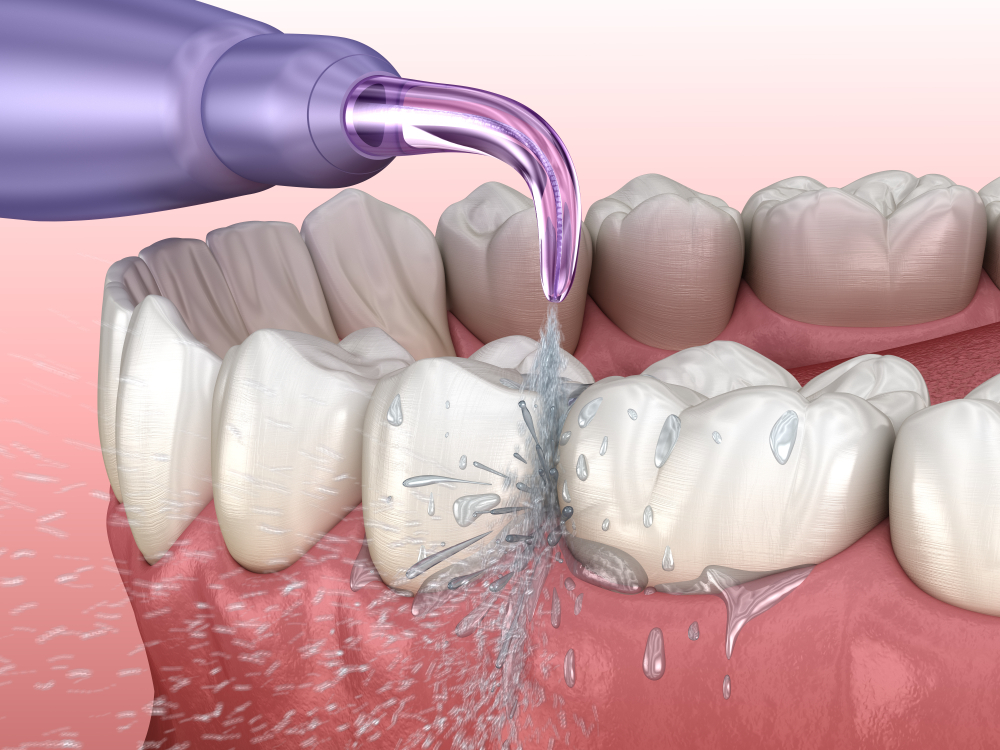 Water flossers, like Waterpik, remove debris from hard-to-reach areas without irritating the gums. Look for a model with a dedicated orthodontic or implant-specific tip, sometimes called a Plaque Seeker tip, and start on a lower pressure setting until you know how your gums respond.
Interdental brushes are equally important for implant patients, since they reach the space between the implant and neighboring teeth that floss alone can miss. These come in different sizes, so ask our team which width fits your specific gaps. Brands like TePe and GUM both make soft-bristled versions designed not to scratch the implant surface.
Antimicrobial Mouthwash
An alcohol-free, antimicrobial mouthwash reduces bacteria and supports gum health. Swish for 30 to 60 seconds after brushing and flossing.
Regular Professional Checkups
Schedule checkups and cleanings at least twice a year. During these visits, our hygienists examine your implants for inflammation or recession, measure gum pocket depth, take X-rays to evaluate the supporting bone, and clean the implant surface with specialized instruments.
Diet and Long-Term Dental Implant Health
After your initial healing period, you can typically return to a normal diet, though some choices support implants better than others.
Foods to favor: soft foods during initial healing, a balanced diet rich in protein, and foods high in Vitamin C and D to support tissue repair and calcium absorption.
Foods to limit: hard, crunchy, or sticky foods that can damage implants, along with sugary and acidic foods that raise infection risk. Limiting alcohol and avoiding smoking also protects healing and long-term implant success.
Protecting Dental Implants From Teeth Grinding
If you grind your teeth at night, a habit known as bruxism, the excess force can loosen an implant or damage the crown over time, even years after successful healing. A custom-fitted night guard distributes that pressure evenly and is one of the most overlooked ways to protect a long-term implant investment. If you notice jaw soreness or a tight feeling in the morning, mention it at your next checkup so we can evaluate whether a night guard makes sense for you.
Watching for Warning Signs of Dental Implant Problems
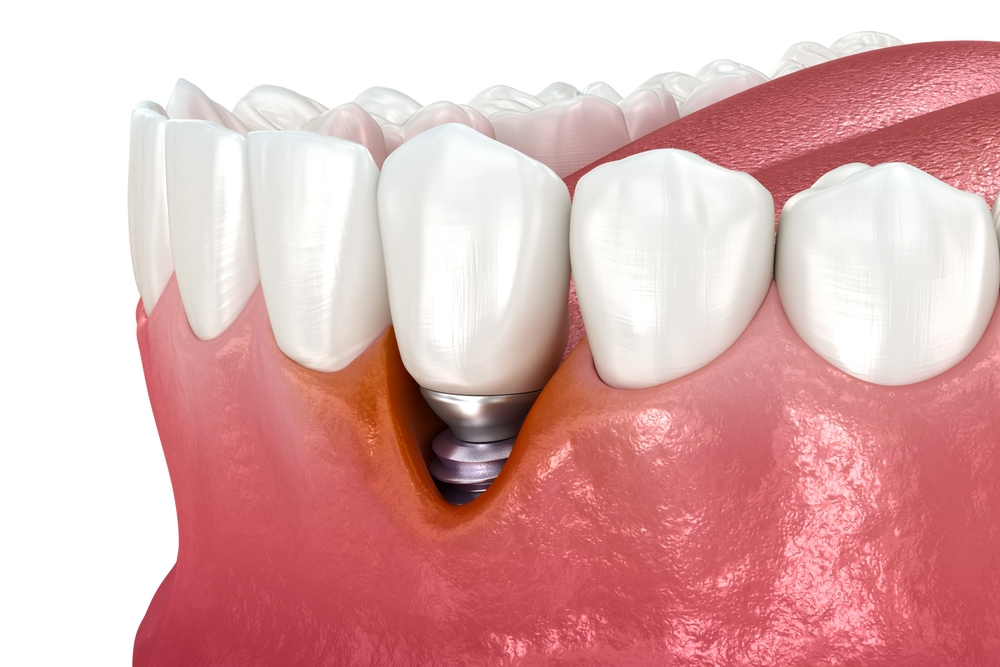 Most implant patients never experience a complication, but knowing the warning signs helps you catch problems early. Contact our office if you notice gum recession, redness, swelling, bleeding, persistent pain, or an implant that feels loose. These can be signs of peri-implantitis, an inflammatory condition that can lead to implant failure if left untreated. Our dental implant failure page covers the full range of symptoms, causes, and treatment options if you’re noticing any of these signs.
Caring for Different Types of Implant Restorations
Maintenance looks slightly different depending on what your implant supports:
- Single Crowns: Treat the area like a natural tooth, with extra attention to the gumline where the crown meets the implant.
- Implant-Supported Bridges: Use a floss threader or water flosser to clean underneath the pontic, the section that spans the gap between implants, since regular floss can’t reach that area on its own.
- Implant-Supported Dentures: Bar- and ball-retained dentures should be removed nightly for cleaning, with special attention paid to the attachment points where the denture snaps onto the implants.
Staying Consistent While Traveling
Travel and holiday schedules can make it easy to slip on your routine, and a few missed days of proper flossing is often when early inflammation gets a foothold. Our guide to managing dental implant care during the holidays has tips for staying consistent when you’re away from your usual routine.