
5 Signs Your Gum Recession Is Getting Worse (And What You Can Do About It Before It’s Too Late)
Gum Recession Treatment From Experienced Periodontists
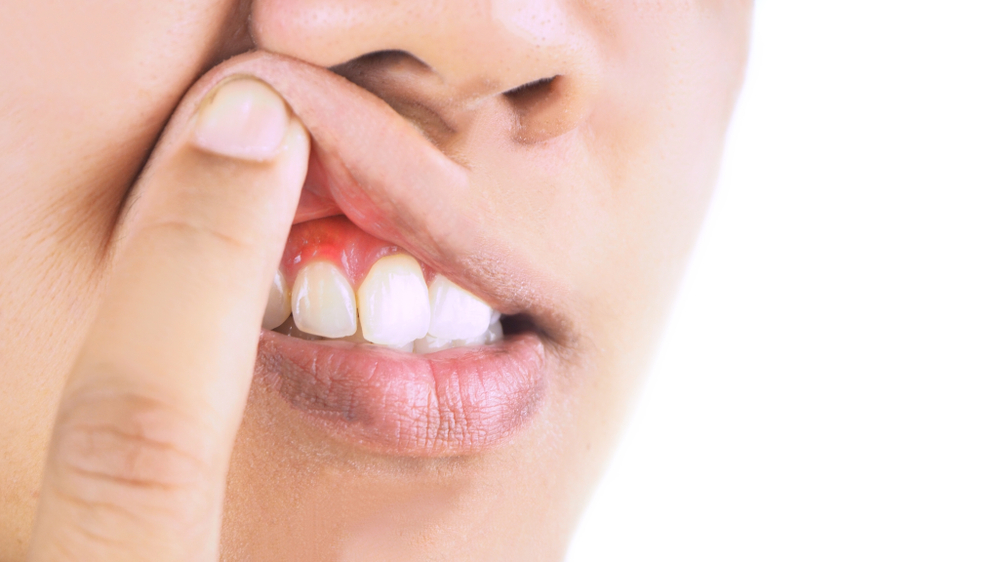 You look in the mirror, and something seems slightly off about your smile. Maybe your teeth look a little longer than you remember. Maybe you feel a sharp zing of sensitivity when you drink a cold glass of water. If you live in Bradenton, Lakewood Ranch, or Parrish, or if you are a neighbor in surrounding areas like Palmetto, Ellenton, and Anna Maria, you are in the right place.
Many people notice subtle changes in their gumline and decide to just wait and see. They convince themselves it is just a minor sensitivity issue. However, gum recession is progressive. The gum tissue does not grow back on its own. The problem will continue to slowly worsen. The good news is that addressing the problem early gives you much simpler, vastly more comfortable options.
We see this hesitation every single day at Rubino Periodontics and Implant Dentistry. Patients worry that treating gum recession means painful surgery, so they avoid the dentist entirely. We want to tell you exactly what is happening in your mouth so you can make an informed choice. Here are the five clearest signs that your gum recession is accelerating. Call the office closest to you to schedule: Bradenton at 941-209-5052, Lakewood Ranch at 941-201-3055, or Parrish at 813-331-5845.
Sign 1: Your Teeth Look Visibly Longer Than They Did a Year Ago
Gum recession is a slow process. The gum tissue gradually pulls away from the crown of the tooth, exposing the root underneath. Because the root does not have the same thick layer of protective white enamel as the crown, it looks entirely different. It frequently appears more yellow or dull.
If you look at a photograph of yourself from a year or two ago and notice a distinct difference in how much tooth is showing, your recession is actively advancing. Your teeth are not actually growing. The foundation holding them in place is simply shrinking. This visual change is often the first thing patients notice, but they frequently dismiss it as a natural part of getting older. It is a specific, treatable medical condition.
Sign 2: Sensitivity to Cold or Touch Near the Gumline Is Worsening
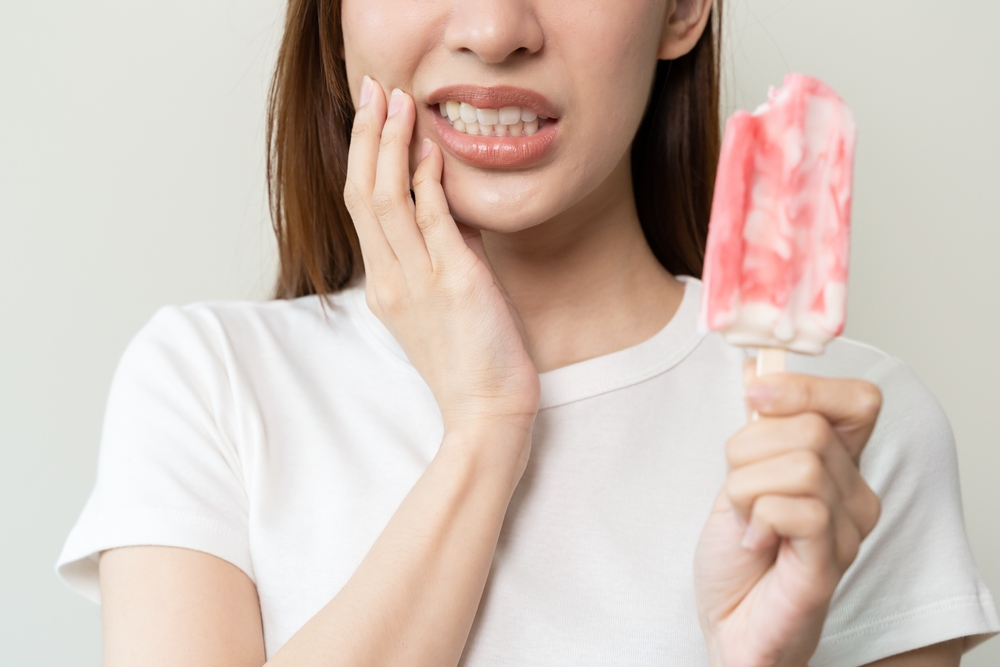 Healthy gums act like a heavy winter coat for the roots of your teeth. The roots contain thousands of microscopic nerve channels. When the gum tissue recedes, that protective coat is removed. Those nerve channels become exposed directly to the environment inside your mouth.
You might notice a sharp, sudden pain when you eat ice cream, drink hot coffee, or even breathe in cold winter air. You might feel a wince of pain when you brush that specific area. Many patients try to adapt by chewing on the opposite side of their mouth or avoiding certain foods. If you find yourself changing how you eat to avoid triggering sensitivity, your recession has reached a point where it requires professional gum recession treatment.
Are you tired of feeling a sharp pain every time you drink cold water? We know it can feel intimidating to find out exactly what is happening with your gums. At Rubino Periodontics and Implant Dentistry, we offer a $79 new patient visit that includes X-rays, a full periodontal exam, and time to sit down with the doctor to talk through your options. No pressure. No surprise charges.
Sign 3: You Can Feel a Notch or Ridge Where the Tooth Meets the Gum
Run your fingernail gently up the front of your tooth from the tip down to the gumline. Do you feel a small indentation or a distinct catch right near the gum tissue? This notch indicates that the soft root surface is exposed and physically wearing away.
Toothbrush bristles and acidic foods can erode this unprotected root surface quickly. Dentists refer to this physical wear as abrasion or abfraction. Once a notch forms, it makes the area much harder to keep clean. Plaque gathers deeply inside the indentation. These trapped bacteria cause further irritation and accelerate the recession even more. The longer the root remains exposed, the deeper the notch will become, eventually threatening the structural integrity of the tooth itself.
Sign 4: Your Gum Line Is Uneven Across Adjacent Teeth
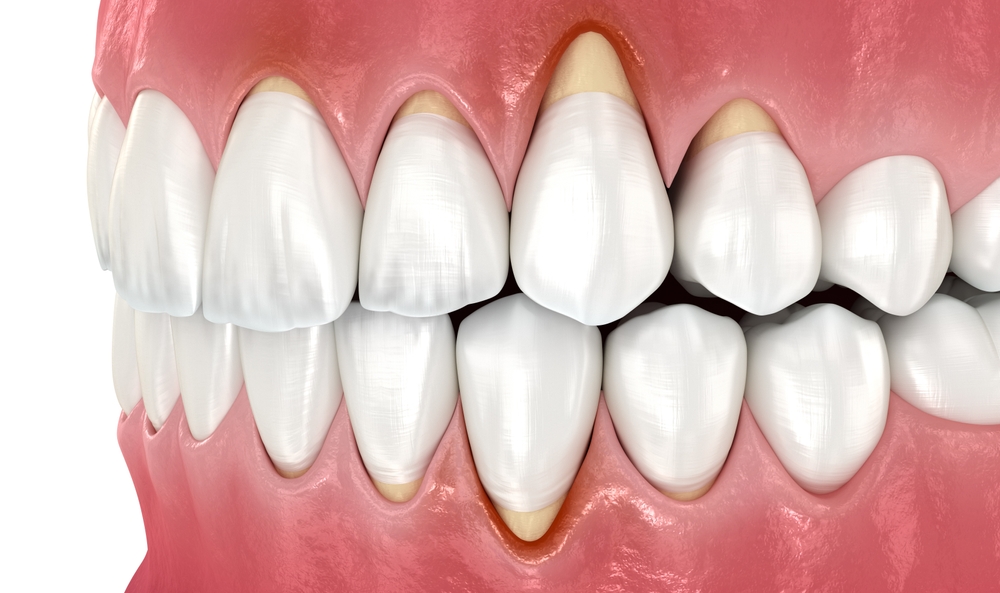 Healthy gums frame your teeth in a beautifully symmetrical, scalloped pattern. If your gums are receding, you will often notice that the tissue sits much lower on one specific tooth than on the teeth immediately next to it.
This unevenness goes beyond aesthetics. The irregular gumline indicates that the bone structure supporting that specific tooth is actively breaking down. Gum tissue cannot stand up on its own. It requires an underlying jawbone for support. When the gum pulls back drastically on a single tooth, it is a glaring red flag that localized bone loss is occurring. You need a specialist to evaluate the foundation of that tooth immediately.
Sign 5: You Have Already Been Told Recession Is “Mild” — More Than a Year Ago
If a dental provider pointed out mild recession a year or two ago, the condition has likely progressed. The underlying causes of recession do not simply vanish without intervention.
If you brush your teeth too aggressively, grind your teeth heavily at night, or have an underlying bite misalignment, the physical stress continues to pull the tissue away from the teeth. If you have active periodontal disease, the bacteria will continue destroying the connective tissue. If it has been more than twelve months since your last periodontal evaluation, your “mild” recession may now be classified as moderate or severe.
Let us figure out your true oral health status together. Do not wait until the damage requires extensive traditional surgery. Call the location nearest you to request an appointment today: Bradenton at 941-209-5052, Sarasota/Lakewood Ranch at 941-201-3055, or Parrish at 813-331-5845. We will tell you exactly what you need to know in plain English.
Why the Recession Doesn’t Pause on Its Own
The gum tissue acts as a protective biological blanket for your jawbone. As we mentioned briefly above, where the gum goes, the bone follows. As the gum tissue recedes, the bone supporting the tooth melts away.
Once that bone is gone, you cannot grow it back naturally. If you ignore the obvious signs of progressive recession, you eventually risk severe tooth mobility and permanent tooth loss. The problem will not plateau. It will not fix itself. It requires professional care to halt the destruction. After the active condition is treated, we place patients on a strict periodontal maintenance schedule to prevent the underlying causes from returning.
Three Board-Certified Specialists and Advanced Clinical Care
At Rubino Periodontics and Implant Dentistry, you benefit from a multi-generational family periodontal practice. Dr. Thomas Rubino opened this office in 1988. His sons, Dr. Ryan and Dr. Tyler, completed their specialty training at the same university where he still serves as an Assistant Professor. Both sons returned home to practice alongside their father.
We bring over 45 years of combined experience treating advanced periodontal conditions. When you see one Rubino, you receive a standard of care built on decades of shared knowledge. We also maintain a deep medical focus. Because periodontal issues often connect directly to broader medical concerns like diabetes and cardiovascular disease, we have two Registered Nurses on staff. They coordinate directly with your physician to provide a completely secure, integrated medical experience.
The Difference Between Treating Recession Early vs. Late
 The stage of your recession dictates the kind of treatment you need. If you wait until the recession is severe and the tissue is exceptionally thin, you will likely need traditional gum grafting. This procedure involves taking tissue from the roof of your mouth and stitching it over the exposed roots. It is highly effective at saving teeth, but the recovery involves stitches and a period of post-operative discomfort.
If you act while the recession is still in a manageable stage, we offer a completely different path. Dr. Thomas Rubino is one of a limited number of practitioners in the United States certified in the Chao Pinhole® Surgical Technique. This minimally invasive approach changes everything about treating gum recession.
There is no cutting. There are no stitches. We make a tiny hole in the gum tissue, gently loosen the gums, and slide them back over the exposed roots to their original, healthy position. Most patients experience virtually no discomfort and are back to normal the very next day. Finding the problem early means you get to take advantage of the absolute most comfortable solutions available.
Call Your Florida Periodontist Family and Get Gum Recession Treatment Today
We have helped thousands of people just like you stop the progression of gum recession and keep their natural smiles for life. We proudly invite potential patients from Palmetto, Ellenton, Anna Maria, and all surrounding areas to visit us for an evaluation. Our periodontists near you are here to help. Come find out what your options are in a relaxed environment with blankets, pillows, and zero judgment. Reach out to schedule your visit: Sarasota/Lakewood Ranch at 941-201-3055, Bradenton at 941-209-5052, or Parrish at 813-331-5845.