
The Importance of Healthy Gums From Our Top-Rated Periodontists
 Why Your Gums Are the Foundation of Your Entire Smile — And What Happens When That Foundation Cracks
Most people think of dental health in terms of teeth — whether they’re straight, white, or free of cavities. But periodontists will tell you a different story: your gums are the foundation everything else is built on, and when that foundation is compromised, the consequences ripple far beyond your mouth.
At Rubino Periodontics & Implant Dentistry, we’ve spent over 45 combined years watching patients arrive in our Bradenton, Sarasota, and Lakewood Ranch offices with everything from gingivitis to severe periodontitis. Education is a powerful tool in treatment and prevention. Here’s what the research actually says about gum health, why it matters, and what happens when it’s ignored.
If you’re in need of gum disease treatment or diagnosis, call any of our Florida dental clinics for periodontal treatment near you in Sarasota/Lakewood Ranch (941-201-3055), Bradenton (941-209-5052), and Parrish (813-331-5845).
Gum Disease Is More Common Than You Think
 The numbers are striking. According to the CDC, nearly half of American adults aged 30 and older have some form of periodontal disease. That figure jumps to 70% among adults 65 and older. Despite how widespread gum disease is, it remains one of the most underdiagnosed conditions in dentistry — largely because its early stages are painless and easy to overlook.
There are two primary stages. Gingivitis is the mild, reversible form characterized by red, swollen, or bleeding gums. Left untreated, it can progress to periodontitis, a more serious infection that damages the soft tissue and destroys the bone supporting your teeth.
The Mouth-Body Connection
Periodontal disease isn’t just a mouth problem. Decades of peer-reviewed research have established strong associations between chronic gum disease and serious systemic conditions, including:
- Cardiovascular disease: Studies published in the Journal of Periodontology and the Journal of General Internal Medicine suggest that people with periodontal disease are nearly twice as likely to have coronary artery disease. The likely mechanism is inflammation: bacterial toxins from infected gum tissue can enter the bloodstream and contribute to arterial inflammation.
- Type 2 diabetes: The relationship is bidirectional. Uncontrolled blood sugar accelerates gum disease progression, and gum disease makes blood sugar harder to control. Research has shown that treating periodontal disease can measurably improve HbA1c levels in diabetic patients.
- Adverse pregnancy outcomes: The American Academy of Periodontology notes associations between untreated gum disease and preterm birth and low birth weight, though causality is still being studied.
- Respiratory illness: Bacteria from the mouth can be aspirated into the lungs, with some studies linking poor periodontal health to increased risk of pneumonia and COPD exacerbations.
What Bone Loss Actually Means
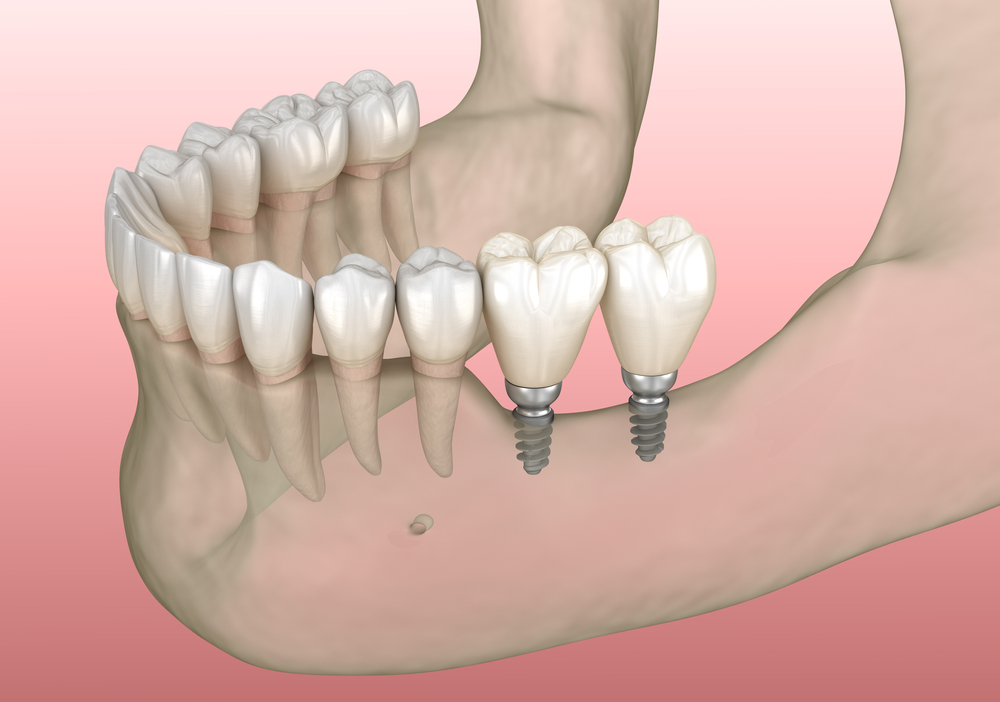 One of the least understood consequences of advanced gum disease is bone loss. When bacteria colonize below the gumline and go untreated, they don’t just inflame soft tissue — they trigger the destruction of the alveolar bone that anchors your teeth.
This process is largely silent in its early stages. By the time symptoms like loose teeth or a shifting bite become noticeable, significant damage has often already occurred. Research published in the Journal of Clinical Periodontology found that untreated periodontitis leads to an average bone loss of 0.1 to 1.0 mm per year — a slow, cumulative process that compounds over decades.
After a tooth is lost due to gum disease, the surrounding bone continues to resorb. Studies show patients can lose up to 25% of bone volume in an extraction site within the first year alone, which has long-term implications for facial structure and tooth replacement options.
Explore how our bone grafting treatment and implant dentistry can help rebuild your smile after treating gum disease.
The Warning Signs Worth Knowing
Gum disease doesn’t always announce itself loudly. The American Dental Association identifies these as the key signs to watch for:
- Gums that bleed during brushing or flossing
- Persistent bad breath
- Red, swollen, or tender gum tissue
- Gums that appear to be pulling away from the teeth
- Teeth that feel loose or have shifted position
- Pain when chewing
Bleeding gums in particular are widely dismissed as normal, but they’re not. Healthy gum tissue doesn’t bleed from routine brushing — it’s one of the earliest and most reliable indicators that inflammation is present.
Prevention: What the Evidence Supports
The good news is that gum disease is largely preventable and, in its early stages, fully reversible. Research consistently supports the following:
Brushing twice daily with fluoride toothpaste reduces plaque accumulation, the primary driver of gum inflammation. The ADA recommends brushing for two full minutes each session.
Daily flossing reaches the 40% of tooth surfaces that a toothbrush can’t. A Cochrane review found that regular flossing combined with toothbrushing significantly reduces gingivitis and plaque compared to brushing alone.
Professional dental cleanings every six months allow for early detection and removal of hardened tartar (calculus) that home care cannot address. For patients with a history of gum disease, more frequent intervals — typically every three to four months — are often recommended.
Not smoking is one of the most impactful things a person can do for gum health. Smokers are up to seven times more likely to develop periodontal disease than non-smokers, according to the CDC, and they respond less predictably to treatment.
Managing blood sugar is essential for diabetic patients, given the bidirectional relationship between diabetes and periodontal disease.
When to See a Periodontist
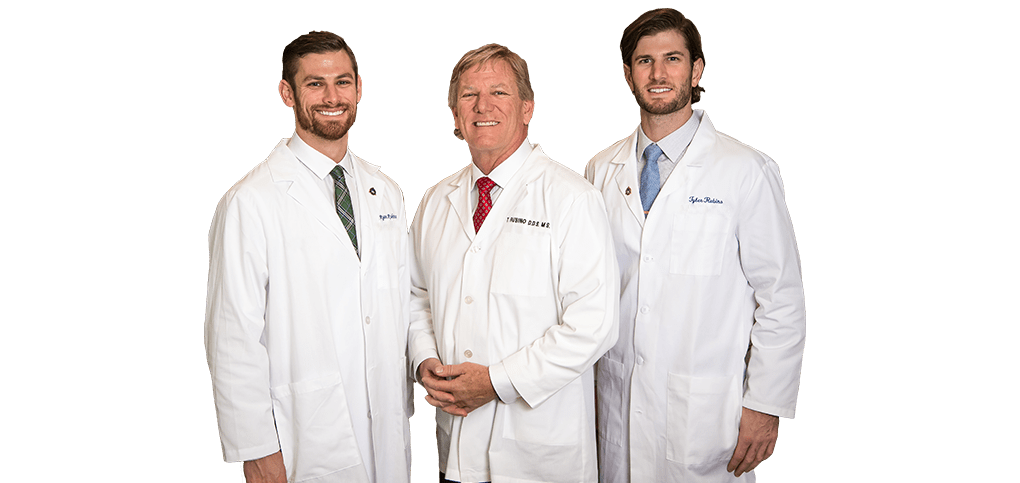 A general dentist can diagnose and treat gingivitis and mild gum disease, but a periodontist — a specialist with three additional years of post-dental school training in gum and bone disease — is the appropriate provider for moderate to advanced periodontitis, significant bone loss, gum recession, or implant-related concerns.
The American Academy of Periodontology recommends a comprehensive periodontal evaluation at least once a year, even for patients with no obvious symptoms.
A Family Practice Built on Decades of Trust
Your gums don’t get nearly the attention your teeth do, but the research makes a compelling case that they deserve it. Treating them as an afterthought is a risk that extends well beyond your smile.
There’s something meaningful about a father and his two sons all choosing the same specialty. Drs. Thomas, Ryan, and Tyler Rubino didn’t just inherit a practice — they built a philosophy of care that blends decades of clinical experience with the latest in laser therapy, implant technology, and minimally invasive surgery.
If you’re in Palmetto, Ellenton, Parrish, or Anna Maria and have been told you have gum disease, are considering implants, or have simply noticed your gums aren’t where they used to be, a consultation with a board-certified periodontist is the most important call you can make for your long-term oral and overall health.
Call our Bradenton dental office at 941-209-5052, Sarasota dental office at 941-201-3055, or Parrish dental office at 813-331-5845 to schedule your evaluation today.