

Comfortable Frenectomy Treatment from Board-Certified Periodontists
A small band of tissue can create surprisingly significant problems. The frenum, a thin fold of soft tissue that connects the lip, cheek, or tongue to the gum tissue or floor of the mouth, is present in everyone. But when a frenum is too short, too thick, or attached too close to the teeth, it can restrict movement, pull on gum tissue, contribute to recession, and interfere with everything from speech to orthodontic treatment to dental implant success. At Rubino Periodontics and Implant Dentistry, Drs. Thomas, Ryan, and Tyler Rubino perform frenectomy procedures for patients throughout Bradenton, Sarasota, and Lakewood Ranch, as well as nearby communities including Palmetto, Parrish, and Ellenton.
Whether you have been referred by your general dentist or orthodontist, or you have noticed symptoms on your own, our board-certified periodontists have the surgical training to assess and treat frenum problems accurately. Call our Bradenton periodontal office at 941-209-5052, our Sarasota/Lakewood Ranch periodontal office at 941-201-3055, or our Parrish periodontal office at 813-331-5845 to schedule your consultation.
Who Performs Frenectomies at Rubino Periodontics?
Frenectomies are soft tissue surgical procedures, which place them squarely within the scope of periodontal specialty training. At Rubino Periodontics and Implant Dentistry, every frenectomy is performed by a board-certified periodontist with advanced surgical training in gum and soft tissue procedures.

Dr. Rubino’s two sons, Ryan and Tyler, will be joining the practice.
Our practice has served Manatee and Sarasota counties since 1988, and Drs. Thomas, Ryan, and Tyler Rubino bring that depth of specialist experience to every soft tissue procedure they perform. Dr. Thomas Rubino holds a faculty appointment as Assistant Professor at the University of Kentucky College of Dentistry and has been recognized as a Top Dentist in Sarasota Magazine every year since 2011. When a frenectomy is part of a broader treatment plan, whether that includes periodontal care, implant placement, or coordination with an orthodontist, our team is positioned to manage the full picture in one specialist office.
What Is a Frenectomy?
A frenectomy is a minor surgical procedure that removes or releases a frenum attachment that is causing functional or structural problems in the mouth. The procedure eliminates tension on the gum tissue, removes the barrier that was restricting movement, and in many cases resolves symptoms that patients have managed for years without realizing treatment was available. Frenectomies are performed on both children and adults, and the recovery is typically straightforward with minimal downtime.
Types of Frenectomy
The mouth contains several frena, and the type of frenectomy performed depends on which one is causing the problem.
Labial Frenectomy (Lip Tie Release)
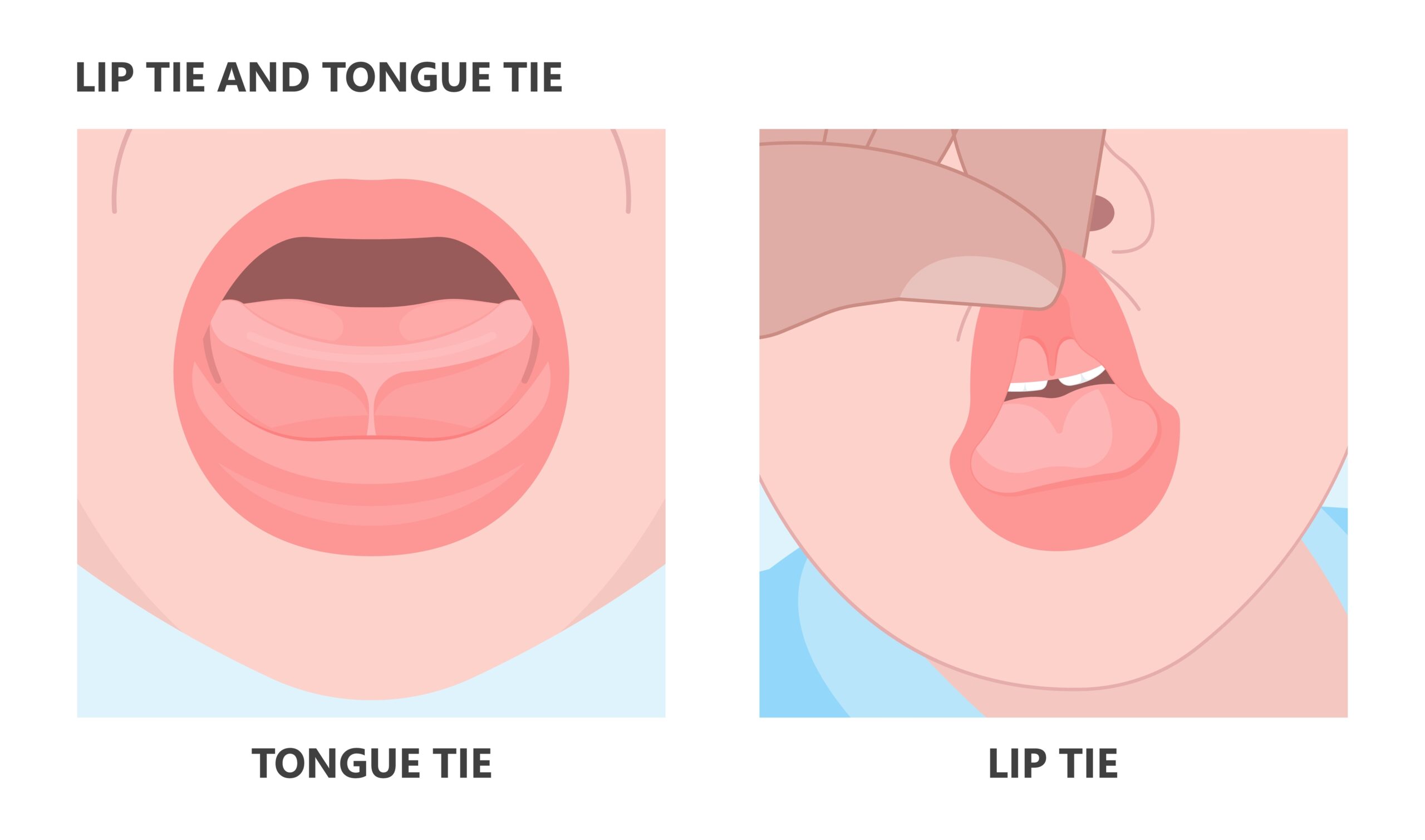
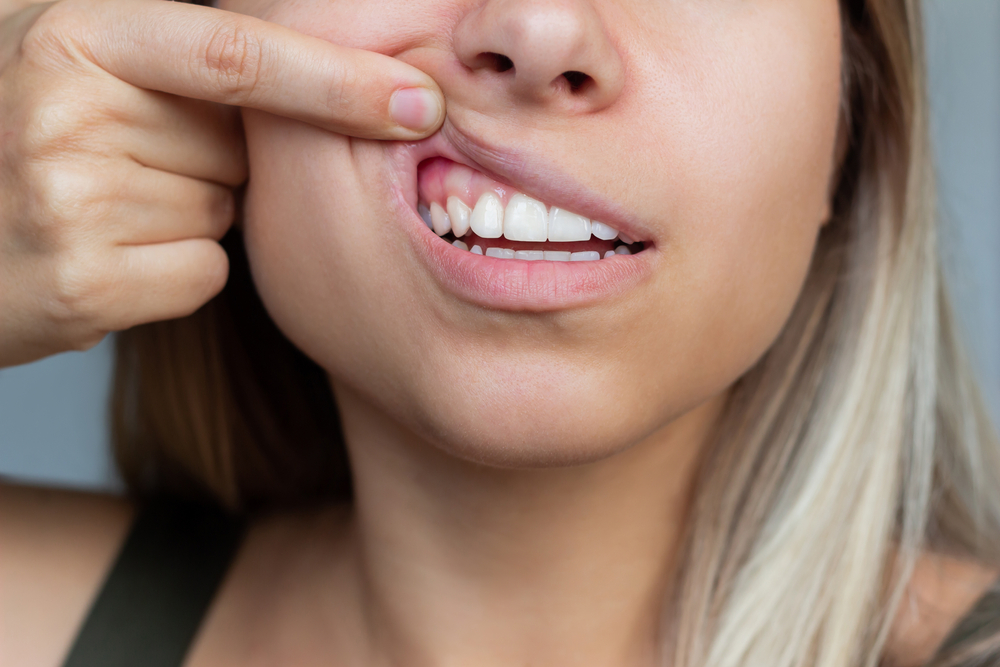
The labial frenum connects the upper or lower lip to the gum tissue. When the upper labial frenum is too thick or attaches too close to the teeth, it can create a gap between the upper front teeth called a diastema, pull on the gum tissue and contribute to recession, and interfere with denture fit or implant-supported restoration stability. A labial frenectomy releases this attachment, allowing the gap to close naturally or with orthodontic support, and relieving tension on the gum tissue.
Lingual Frenectomy (Tongue Tie Release)
The lingual frenum connects the underside of the tongue to the floor of the mouth. When this frenum is too short or tight, a condition commonly called tongue tie or ankyloglossia, it restricts the tongue’s range of motion. In adults, this can cause speech difficulties, problems with certain foods, jaw tension, discomfort during dental procedures, and challenges with oral hygiene in the lower front area. Lingual frenectomy releases the restriction and restores fuller tongue movement. Adults who were not treated for tongue tie in childhood often discover that releasing this tissue resolves long-standing discomfort or functional limitations they had come to accept as normal.
Buccal Frenectomy
Smaller frena connect the cheeks to the gum tissue in the premolar areas of the mouth. These buccal frena can occasionally pull on marginal gum tissue and contribute to localized recession or discomfort. Buccal frenectomy addresses these attachments when they are creating a clinical problem.
Signs You May Need a Frenectomy
Frenum problems are not always obvious, and many patients are referred by their dentist or orthodontist based on clinical findings rather than symptoms they brought up themselves. Common reasons a frenectomy may be recommended include:
 A visible gap between the upper front teeth that has not closed with orthodontic treatment or that pulls open after braces are removed
- Gum recession localized to the area where a frenum attaches
- A tongue that cannot reach the roof of the mouth or extend past the lower front teeth
- Speech patterns that feel restricted, particularly with sounds that require tongue elevation
- Difficulty with certain textures of food due to limited tongue mobility
- Dentures or removable appliances that are chronically dislodged by frenum tension
- An orthodontist or dentist who has specifically recommended frenectomy as part of your treatment plan
- Discomfort or tightness in the floor of the mouth, particularly during eating or dental appointments
The Frenectomy Procedure: What to Expect
Frenectomy is an outpatient procedure performed under local anesthesia in our office. Most appointments take between 30 and 60 minutes, depending on which frenum is being addressed and the complexity of the attachment. Sedation is available for patients who experience anxiety about oral surgery.
The procedure follows a straightforward sequence:
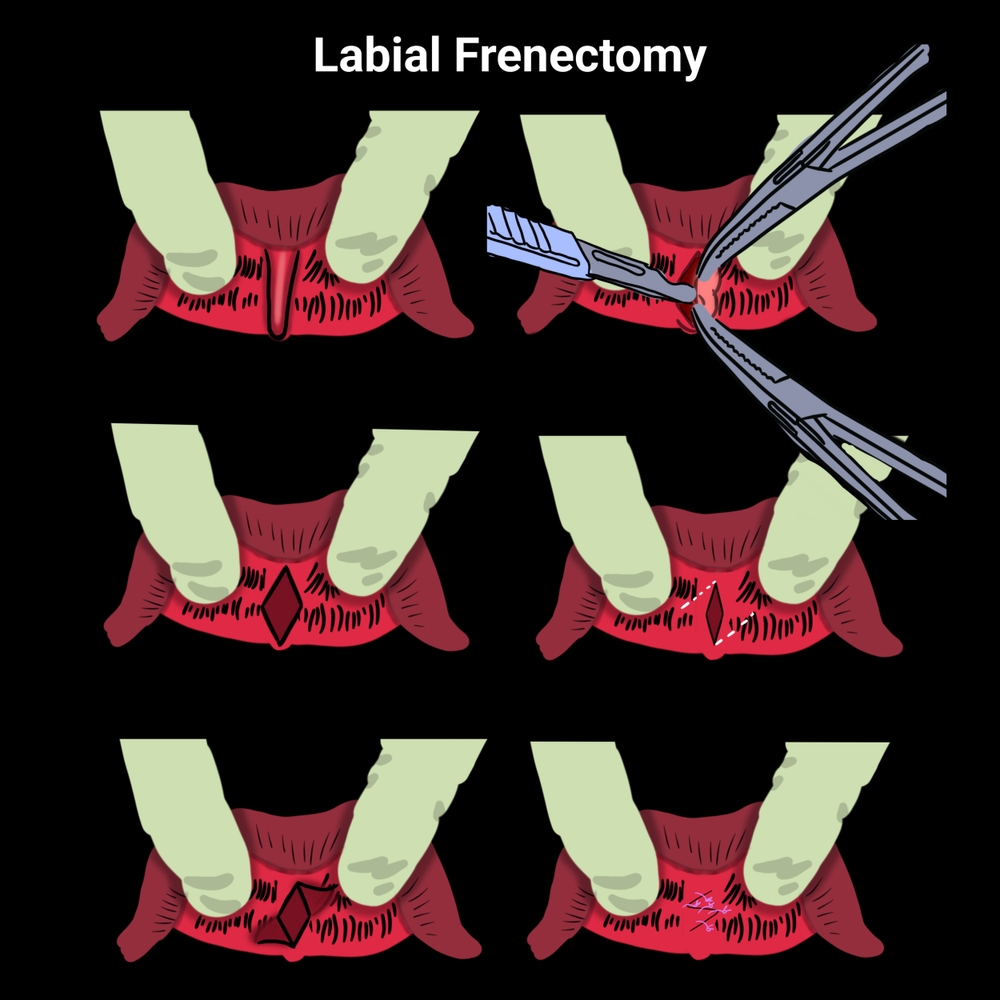 Evaluation and Anesthesia: Your periodontist examines the frenum, confirms the treatment plan, and administers local anesthesia to numb the area completely
- Tissue Release: The frenum is released or removed using a scalpel or soft tissue laser, depending on your anatomy and your periodontist’s assessment of the best approach
- Closure: The site is closed with sutures if needed. Laser frenectomies often require minimal or no suturing
- Post-Operative Instructions: You receive detailed written instructions before leaving the office, along with any necessary prescriptions
Most patients are comfortable returning to normal daily activity the following day. The treated area heals within one to two weeks in most cases.
Laser Frenectomy
Our practice offers laser-assisted periodontal treatment as an option for appropriate cases. Soft tissue laser treatment offers several advantages over conventional scalpel technique:
- Reduced bleeding during the procedure due to the laser’s ability to cauterize as it works
- Less post-operative swelling and discomfort in many patients
- Minimal or no suturing required in most cases
- Shorter recovery time for many patients
- High precision in the treatment area, which is particularly valuable when working near delicate gum tissue
Your periodontist will recommend the approach best suited to your specific frenum anatomy and treatment goals.
Recovery After Frenectomy
Recovery from frenectomy is generally mild and manageable. Most patients experience some soreness and minor swelling at the surgical site for the first few days, which responds well to over-the-counter pain relievers. The following general guidelines apply to most frenectomy recoveries:
 Stick to soft foods for the first few days and avoid anything hot, spicy, or hard that could irritate the site
- Avoid touching or probing the area with your tongue or fingers
- Rinse gently with an antimicrobial mouthwash as directed, but avoid vigorous rinsing for the first 24 hours
- Refrain from strenuous physical activity for 24 to 48 hours to minimize swelling
- Attend your follow-up appointment so your periodontist can confirm healing is progressing as expected
If your frenectomy is part of an orthodontic treatment plan, your orthodontist will advise you on when to resume appliance wear or when to begin tooth movement following the procedure.