
Told You Don’t Have Enough Bone for Traditional Implants?
Mini dental implants offer a less invasive, more accessible path to implant-supported tooth replacement, particularly for patients who’ve been told they don’t have enough jawbone density for standard implants. At Rubino Periodontics & Implant Dentistry, we use mini implants to provide a stable foundation for dental restorations while avoiding, in many cases, the bone grafting that standard dental implants would require.
Call 941-201-3055 for Sarasota/Lakewood Ranch, 941-209-5052 for Bradenton, or 813-331-5845 for Parrish, or book online. We proudly serve residents from North Port, Tampa, and Palmetto.
An Honest Second Opinion on Bone Grafting
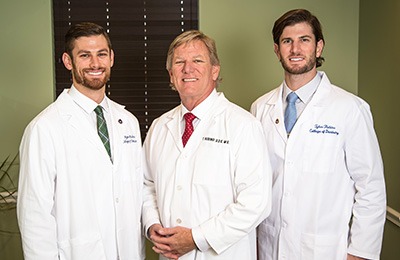
Dr. Rubino’s two sons, Ryan and Tyler, will be joining the practice.
Patients often arrive here after being told elsewhere that they need bone grafting before any implant is possible. Because our doctors are periodontists first, specialists in exactly the bone and soft tissue mini implants are designed to work around, we’re positioned to give a genuinely independent read on whether grafting is actually necessary or whether a narrower-diameter implant is a legitimate, less invasive path for your case.
Dr. Thomas Rubino’s role as a continuing education provider for Florida dentists since 1990 means he’s spent decades evaluating and teaching on the full range of implant systems, not just the treatments that carry the highest fee. That’s the kind of recommendation you want when the option on the table is specifically framed as more affordable and less invasive: a specialist’s assessment, not a sales pitch.
What Is a Mini Dental Implant?
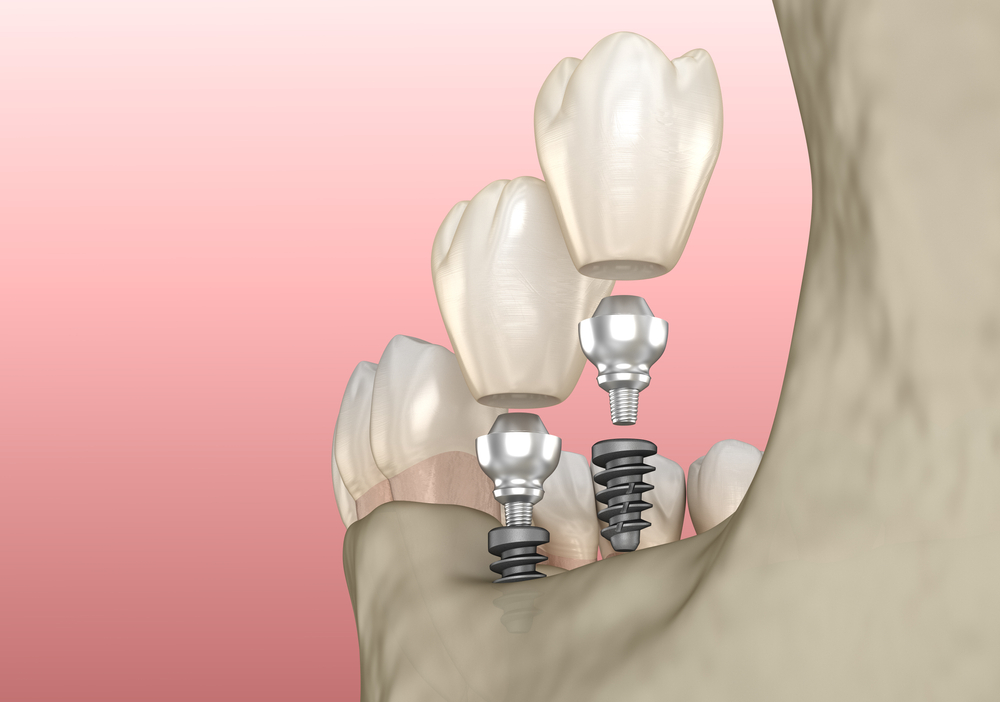
Mini dental implants are narrower-diameter versions of traditional implants, typically ranging from 2mm to 3.5mm compared to the 3.5mm to 6mm range of standard implants. Made from biocompatible titanium or zirconia, they’re designed to integrate with your jawbone the same way a standard implant does, just through a narrower post that requires less bone volume to place successfully.
One-Piece vs. Two-Piece Mini Implants
Most mini implants are one-piece, meaning the implant post and the abutment that connects to the restoration are a single unit, rather than the two separate pieces used in standard implants. This design allows for a smaller incision and, in many cases, a technique called immediate loading, where a temporary restoration can be attached the same day as placement rather than waiting for full osseointegration first. Two-piece mini implants also exist and function more like scaled-down standard implants, offering more flexibility for certain restoration types.
How Mini Implants Differ From Standard Implants
Beyond the size difference, mini implants are placed using a less invasive technique that often doesn’t require the incision and flap procedure used for standard implants. This typically means a shorter procedure, less post-operative discomfort, and faster initial recovery. The tradeoff is that mini implants generally support less biting force than standard implants, which is why they’re most often used for denture stabilization or single-tooth replacement in areas with lower bite force, rather than as the sole support for a full-arch fixed restoration.
Benefits of Mini Dental Implants
- Minimally Invasive: Less invasive placement typically means a shorter recovery.
- Works with Limited Bone Density: The narrower post often eliminates the need for bone grafting.
- More Affordable: Mini implants are generally less expensive than standard implants.
- Immediate Loading in Many Cases: One-piece designs often allow same-day temporary restoration.
- Denture Stabilization: A common and effective use is stabilizing a lower denture that has become loose over time.
Who Is a Candidate for Mini Dental Implants?
Mini implants can be an excellent option for:
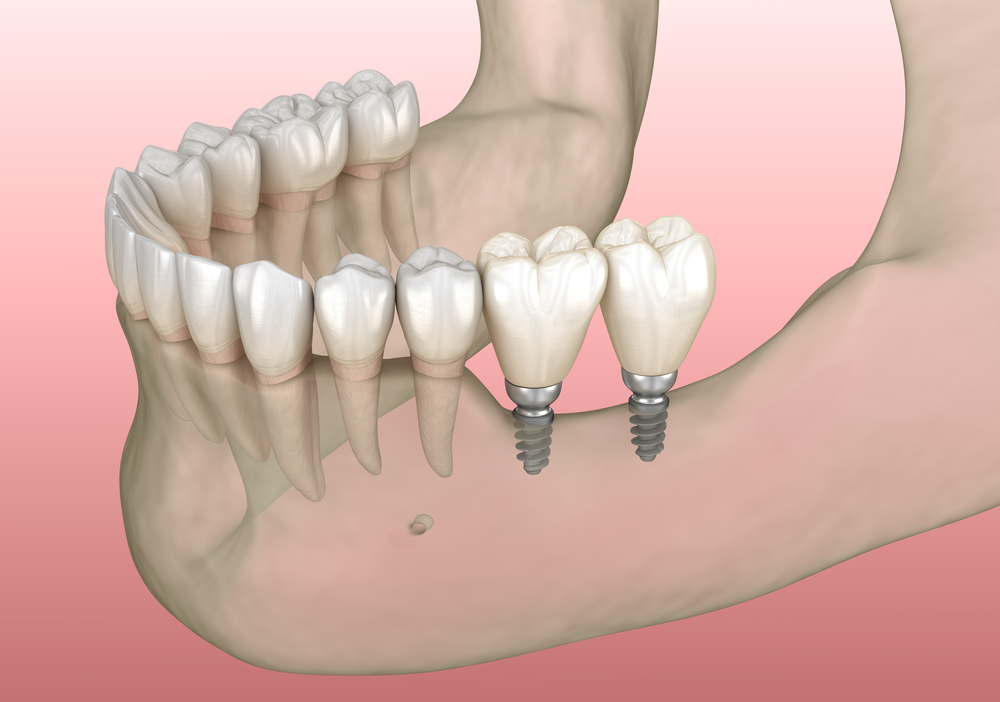 Patients with low bone density who want to avoid bone grafting
- Denture wearers seeking improved stability without committing to a full implant-supported denture or All-on-4 treatment
- Patients replacing a single tooth in an area that doesn’t bear heavy bite force
- Patients seeking a less invasive, more budget-conscious implant option
Mini implants aren’t the right fit for every situation, particularly cases involving significant bite force or full-arch replacement, where a standard implant or All-on-4 treatment may serve you better long-term. Our dental implant candidacy page covers the broader factors we evaluate, and we’ll discuss during your consultation whether mini or standard implants fit your specific case.
Caring for Mini Dental Implants
Daily care for mini implants follows the same principles as standard implants: brushing, flossing, and regular checkups, though the narrower post means gentle technique matters even more to avoid irritating the surrounding tissue. If your mini implants are stabilizing a denture, the attachment points need the same attention as any implant-supported denture. Our dental implant maintenance page covers technique and product recommendations in detail.
Mini Dental Implant Costs
Mini dental implants typically range from $500 to $1,500 per implant, making them one of the more accessible implant options we offer. Total cost depends on how many implants your case requires and the type of restoration being placed. Visit our dental implant cost page for a full breakdown across all of our implant treatments.